

SDG 1
No Poverty
Lower energy and fertilizer costs increase household financial resilience.
Advanced Biogas & Biodigester systems designed for high-efficiency energy production, waste management, and sustainable agricultural support.
In many farming communities, animal manure is left to decompose anaerobically, releasing methane, while households still rely on inefficient firewood cookstoves. A modern biodigester addresses both challenges by capturing methane for clean cooking and converting slurry into organic fertilizer.
This approach supports practical climate mitigation, better household health outcomes, and stronger agricultural productivity through nutrient-rich biofertilizer. It turns waste into value while improving energy reliability at the user level.
Core Focus
Organic waste to clean cooking energy and biofertilizer
Why It Matters
Cuts methane emissions while improving household energy access
Beneficiaries
Farming households, institutions, and local communities
Outcome Direction
Lower fuel costs, better sanitation, and stronger farm productivity
For many households, biodigester technology is still new and the upfront cost is high relative to income. Carbon revenues help subsidize installations, making adoption realistic while accelerating measurable climate impact.
Captures methane directly from waste
Displaces heavy fuelwood dependency
High-quality biofertilizer production
Unlocks local green jobs
SDG 1
Lower energy and fertilizer costs increase household financial resilience.

SDG 2
Biofertilizer improves soil quality and crop productivity for food security.

SDG 3
Cleaner cooking reduces harmful indoor smoke exposure and respiratory risk.

SDG 5
Reduced firewood collection burden gives women more time for income activities.

SDG 7
On-site biogas production delivers reliable modern cooking energy.

SDG 8
Local installation, servicing, and training create green jobs and skills.

SDG 15
Lower fuelwood demand helps reduce deforestation pressure and land degradation.
While many still debate the energy transition, the most serious markets are already investing in biomass and biogas as bankable, operational solutions. Agricultural residues, organic waste, livestock streams and industrial by-products become clean fuel, heat, and long-term economic value when delivered with the right technology.
Energy security from local organic feedstocks
Operational projects, not theory
Smart waste management with resource recovery
Technical evaluation and site-specific design
We assess the actual waste stream, select the right digester and gas-handling systems, and tailor each project to the needs of the site. This is how real biogas initiatives become investment-grade assets.
Where there is organic load, there is opportunity. We convert that opportunity into reliable production, energy security and productive waste management.
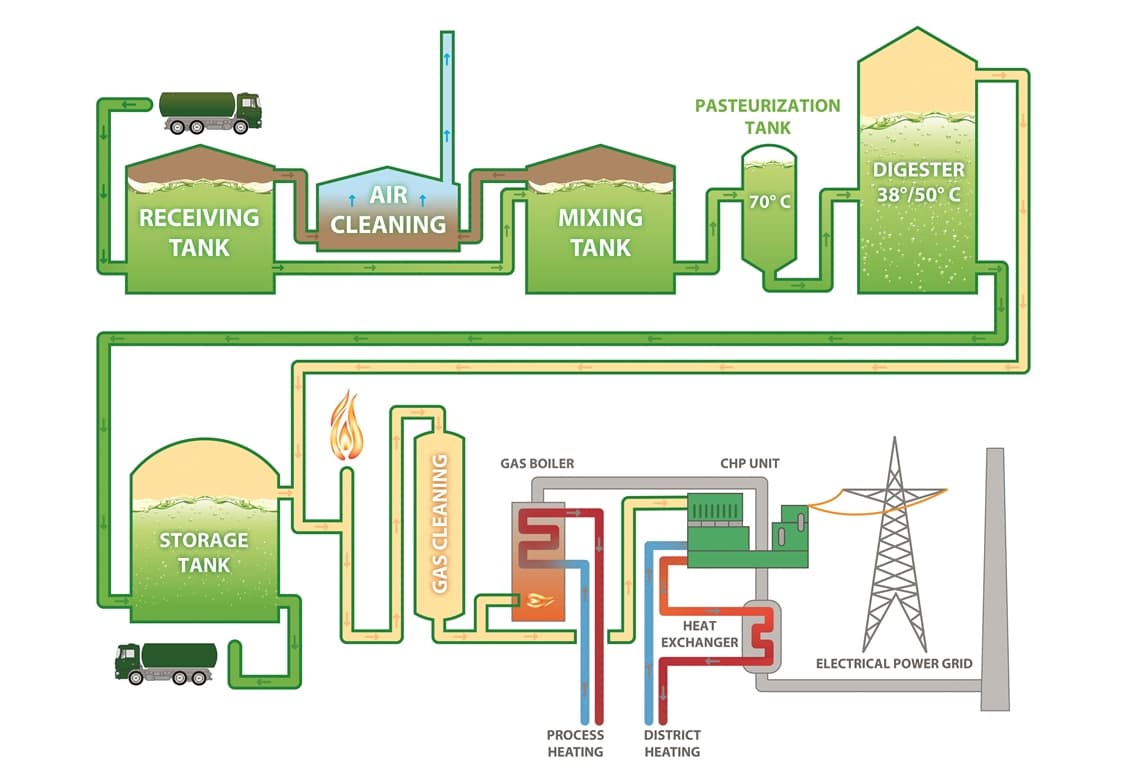
Our biodigester technology is engineered for various feedstocks, including animal manure, agricultural waste, and industrial organic effluent. We focus on temperature control, gas capture efficiency, and sludge management.
Reduce your household costs by up to 60% with a custom digester.
Contact UsFull restoration of legacy biogas systems for peak performance.
Smart household digesters for clean cooking and gas lighting.
High-volume systems for schools, dairies and public sectors.
Corrosion-proof fiberglass builds for long-term structural integrity.
Significant reduction in dependency on traditional firewood.
Drastic reduction in manual labor required for energy collection.
Major savings from household energy expenditures.
Capture methane that would otherwise enter the atmosphere.
Organic fertilizer output supports healthier soils and stronger yields.
Creating local employment through installation and maintenance.
Improved homestead sanitation and overall family hygiene.
To ensure optimal performance and sustainability, a location must meet specific operational criteria for feedstock and space.
Availability of at least 30kgs of dung or 2 zero grazed cows.
Sufficient and stable area for the digester unit placement.
Reliable availability of water for mixing with organic waste.
Client's willingness to finance the core project costs.
* A site assessment is recommended for optimal configuration.
A selection of recent site photos showcasing clean energy installations across Kenya.
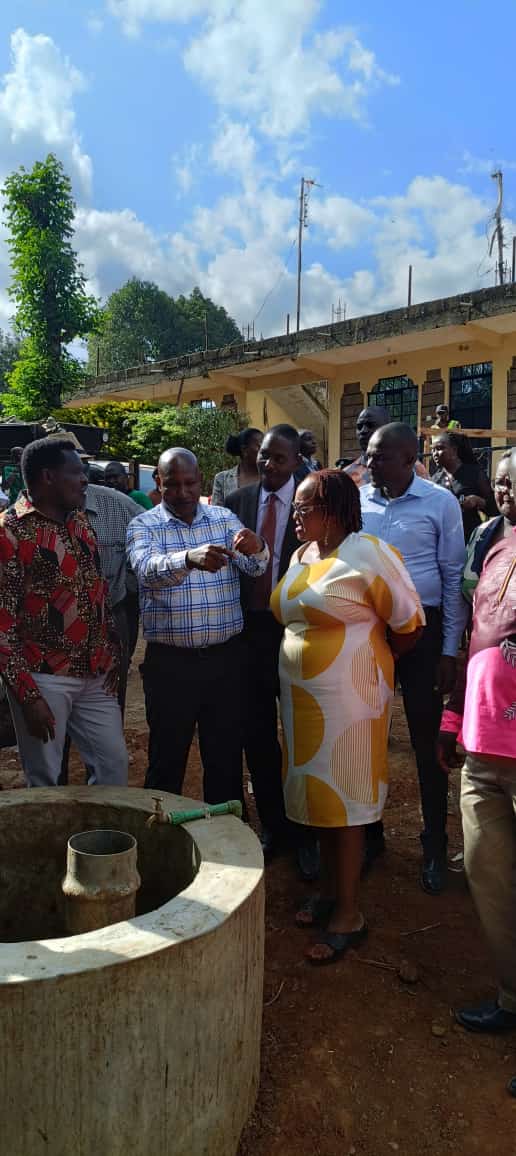
"With Tharaka Nithi County Governor and other executives during the launch of a school Biogas project."
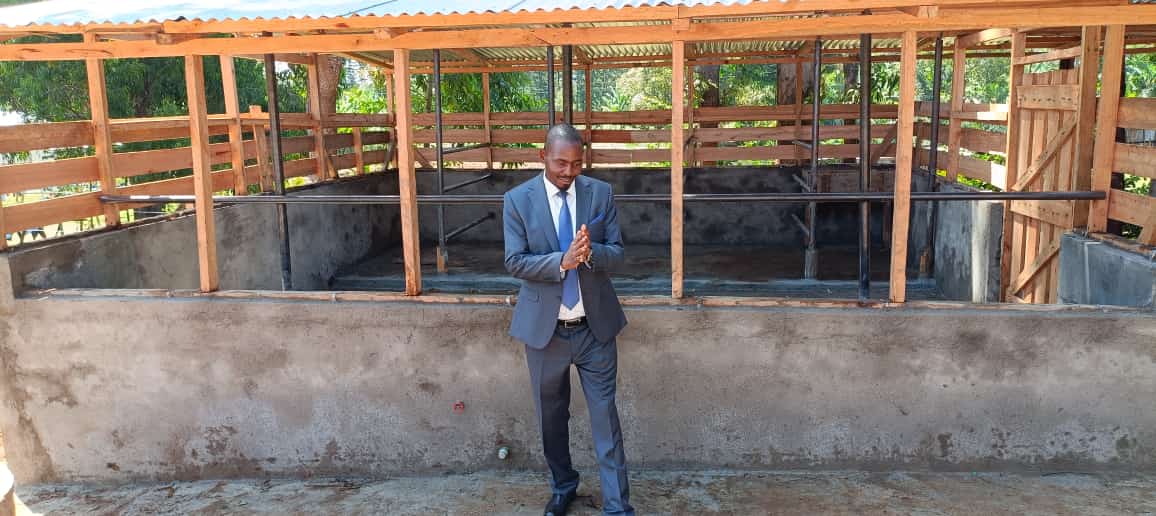
"Initial site survey and inspection of a dairy unit where cows are kept. The findings guide biogas plant design and sizing."
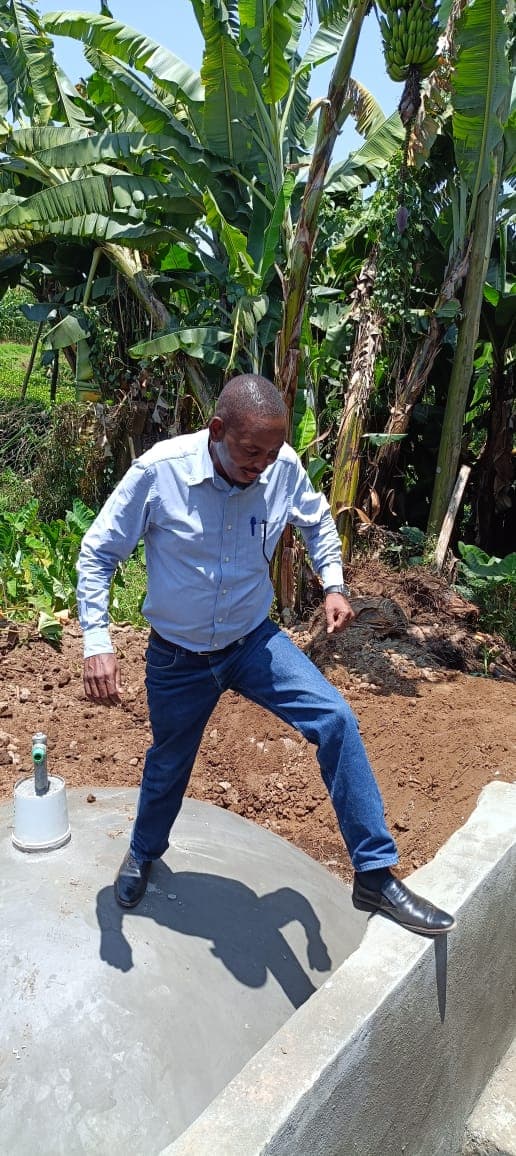
"Site inspection for quality assurance."
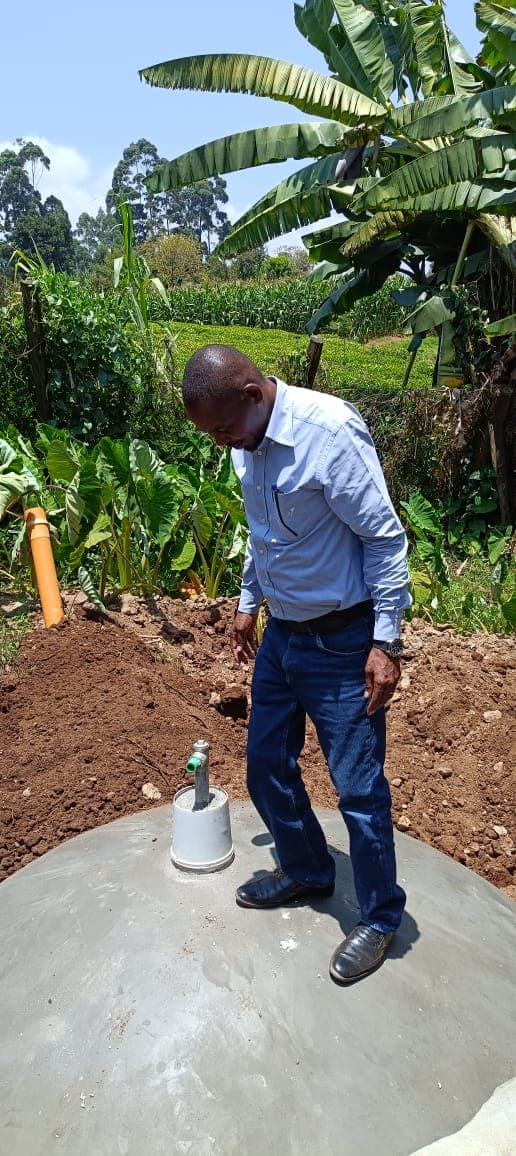
"Commissioning-phase inspection and system verification on site."
.jpeg&w=3840&q=75)
"Installation of the biogas digester base and inlet piping."
.jpeg&w=3840&q=75)
"Feedstock preparation area and waste handling system."
.jpeg&w=3840&q=75)
"Structural work for the digester and gas storage components."
.jpeg&w=3840&q=75)
"Plumbing and mechanical connection details."
.jpeg&w=3840&q=75)
"Quality checks before commissioning the system."
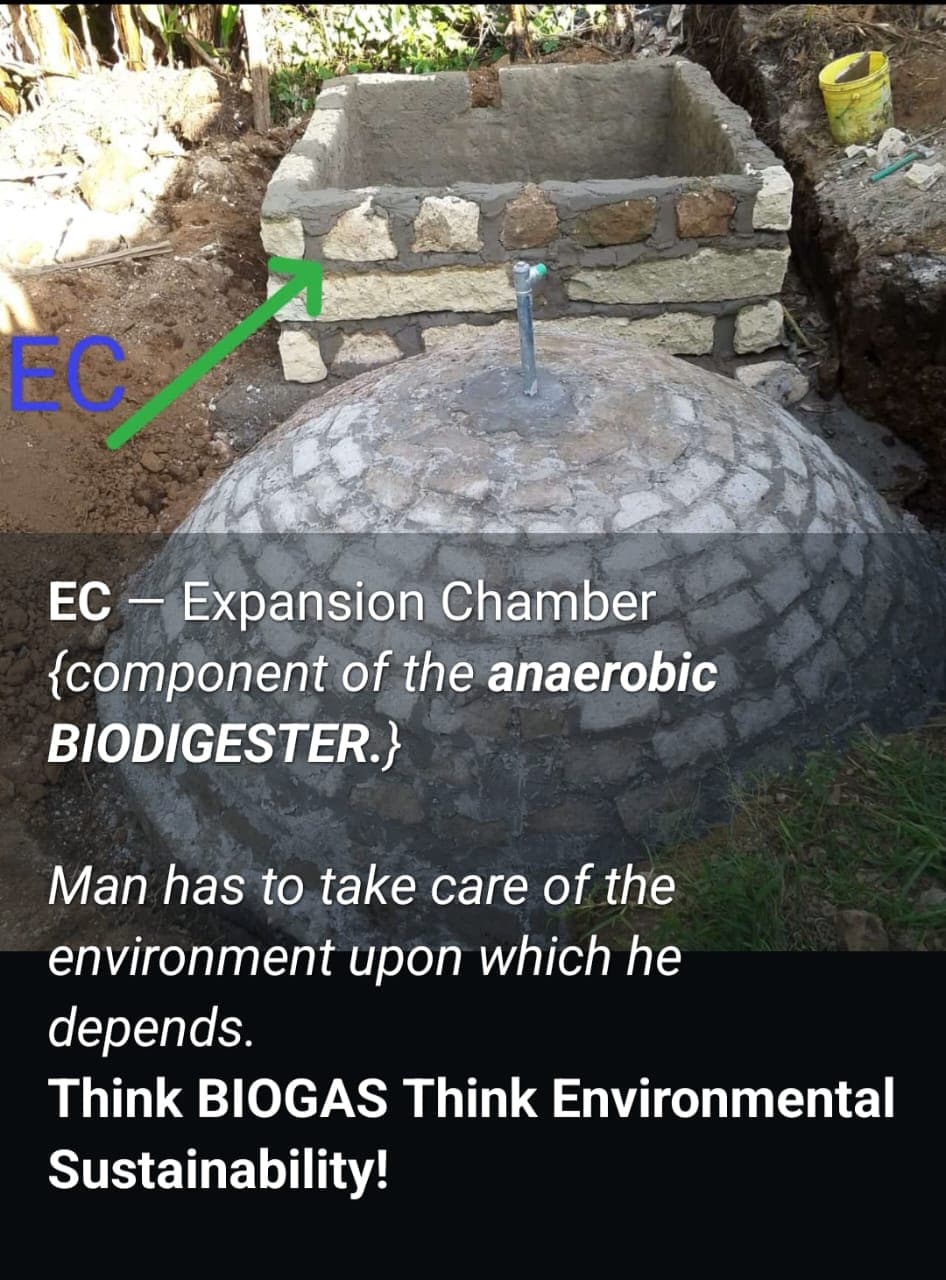
"Completed installation ready for testing."
.jpeg&w=3840&q=75)
"Operational biogas plant illustrating clean energy delivery."