
Agri-Solar Water Pumping
Solar pumping systems provide reliable irrigation and livestock water where grid supply is weak or unavailable. Smart controllers and correctly sized pump heads improve runtime and reduce maintenance pressure.
Integrated clean-energy systems for agriculture and rural livelihoods, combining solar water pumping, solar cooling, and solar lighting into one resilient service model.
Global data shows rapid renewable growth, but access and affordability gaps remain in many developing markets. Our ecosystem approach connects generation, storage, and productive loads so farms can irrigate, cool produce, and run essential lighting with lower operating cost. By aligning system design to water demand, crop cycles, and site realities, we help clients reduce downtime risk, stabilize energy spend against diesel volatility, and protect productivity during grid outages. The result is a practical infrastructure model that supports day-to-day operations, improves post-harvest quality, and builds stronger rural enterprise resilience over time.
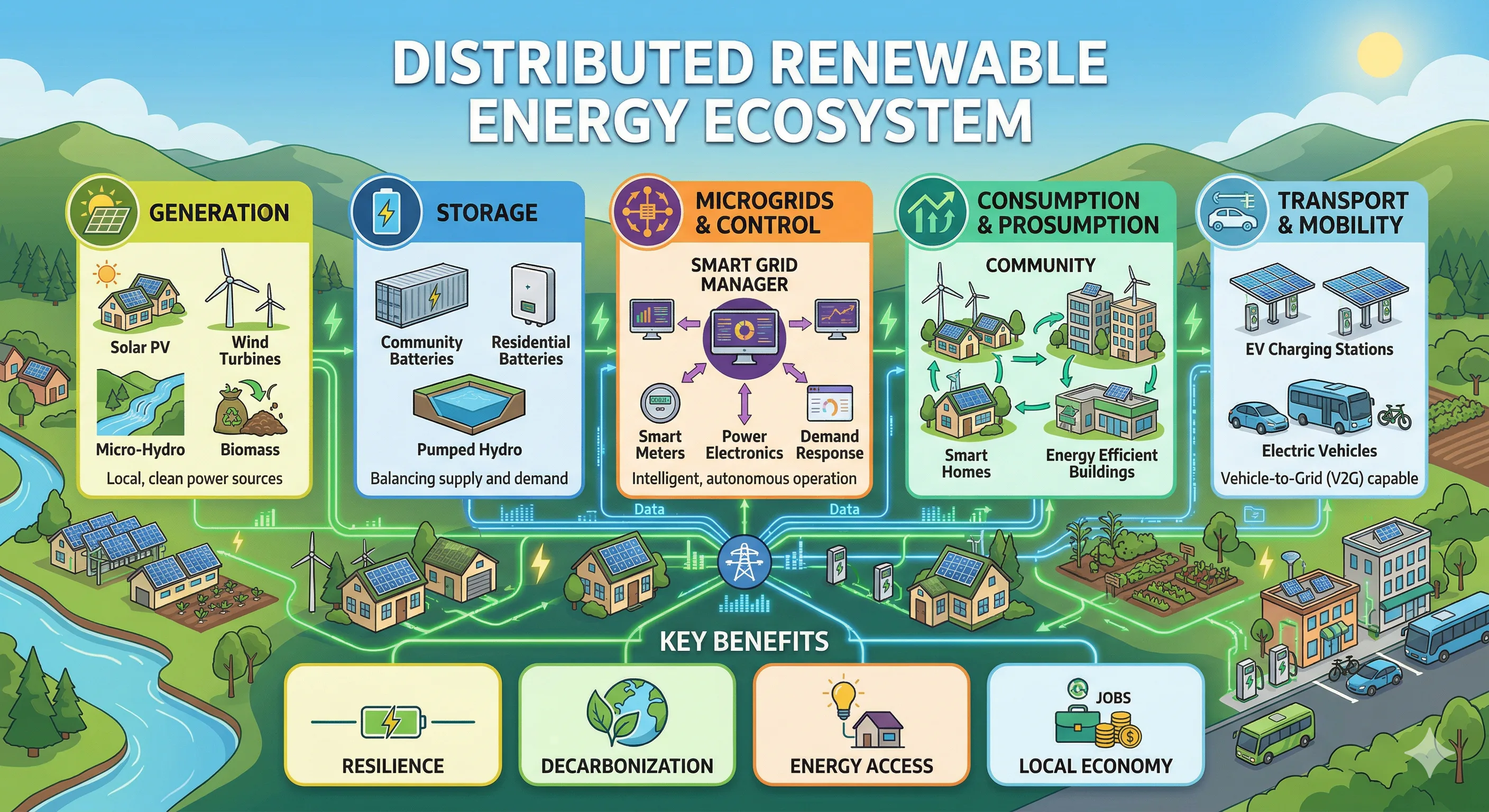
Ecosystem Focus: Irrigation, Cooling, and Lighting in one integrated plan.
Solar pumping systems provide reliable irrigation and livestock water where grid supply is weak or unavailable. Smart controllers and correctly sized pump heads improve runtime and reduce maintenance pressure.
Solar coolers and refrigerators support cold-chain resilience for farm produce and temperature-sensitive products. This helps reduce post-harvest losses and protects product quality in hot climates.
LED solar lighting systems improve safety, productive hours, and operations in off-grid homes, farms, and institutions. They also reduce dependence on fuel-based lighting and recurring fuel costs.
+50%
Renewable Capacity Growth
Global renewable capacity additions grew by about 50% in 2023, reaching nearly 510 GW, with solar PV accounting for roughly three-quarters of additions.
IEA (Renewables 2023 press release, Jan 2024)
92%
Global Electricity Access
Global electricity access improved from 84% in 2010 to 92% in 2023, showing progress but also persistent reliability and affordability gaps.
UN SDG 7 (2025 update)
645M
People Still at Risk
At the current pace, about 645 million people could still lack electricity access by 2030, underscoring the need for decentralized solutions.
UN SDG 7 (2025 update)
29k+
Food Loss Data Points
FAO's FLW database compiles more than 29,000 data points from 700+ reports, highlighting why cold-chain and solar cooling interventions matter.
FAO FLW Technical Platform
Site energy and water-demand assessment
Pump, PV array, and storage sizing
Installation with controls, protection, and monitoring
Training, O&M support, and performance follow-up
From irrigation to cooling and lighting, we design systems around your water profile, productive loads, and long-term maintenance realities.
Start Your Project